Can Police Search Your Car in Indiana? (2026 Guide)
If you were stopped in Indiana, including in Whitley County, Indiana, here’s what you should know about vehicle searches and your rights.
Getting pulled over is stressful enough.
But for many people, the situation becomes even more stressful when an officer says:
“Do you mind if I search your vehicle?”
Or worse, officers begin searching the vehicle without asking at all.
One of the most common questions we hear is:
“Were they even allowed to search my car?”
The answer depends on the circumstances.
Can Police Search Your Car in Indiana?
Sometimes yes.
Sometimes no.
The legality of a vehicle search depends heavily on:
- Why you were stopped
- What officers observed
- Whether consent was given
- Whether police claim they had probable cause
Vehicle search laws can become very fact-specific.
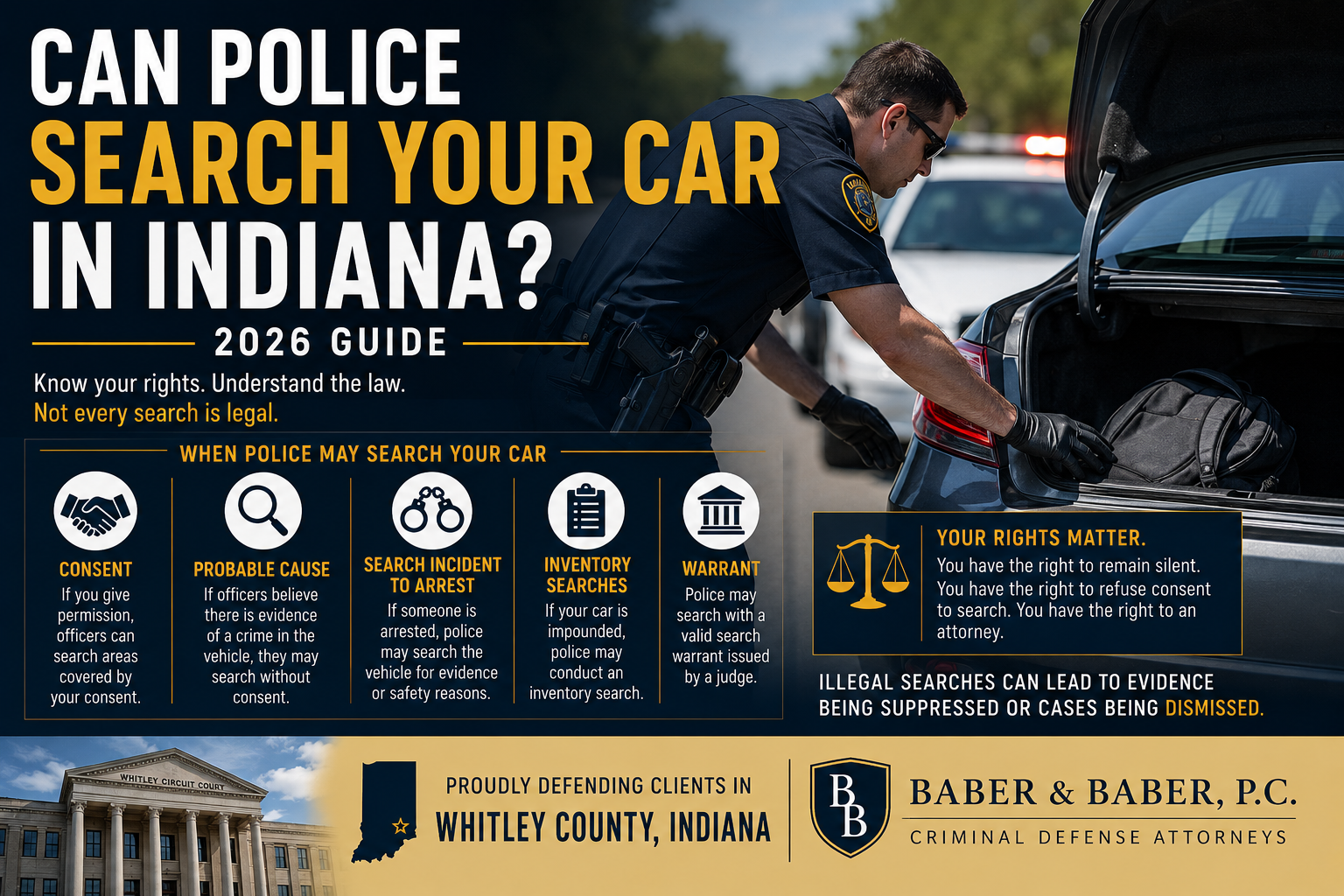
1. Consent Searches
One of the most common vehicle searches happens through:
Consent
This is when an officer asks:
- “Do you mind if I take a look?”
- “Can I search your car?”
- “You don’t have anything illegal in there, right?”
If you voluntarily agree, police may search the areas covered by your consent.
Do You Have to Consent?
Generally, No.
People often feel pressured during traffic stops, but consenting to a search is different from complying with basic instructions like providing:
- license,
- registration,
- and insurance information.
2. Probable Cause Searches
Police may also search a vehicle without consent if they claim they have:
Probable cause
Probable cause generally means officers believe evidence of a crime may be inside the vehicle.
Examples officers may rely on include:
- Odor of marijuana or alcohol
- Visible contraband
- Statements made during the stop
- Drug paraphernalia in plain view
- Admissions by occupants
3. Search Incident to Arrest
If someone is arrested during the stop, officers may sometimes search portions of the vehicle connected to:
- the arrest,
- officer safety,
- or possible evidence related to the offense.
4. Inventory Searches
If a vehicle is impounded, police may conduct what’s called an inventory search
This is intended to document the contents of the vehicle before towing.
However, these searches can become heavily disputed depending on:
- department procedures,
- timing,
- and how the search was conducted.
What If Police Find Drugs, Guns, or Other Illegal Items?
If officers find evidence during a search, it may lead to charges such as:
- Drug possession
- Possession of paraphernalia
- Illegal firearm possession
- OWI-related charges
- Theft-related offenses
The legality of the search can become a major issue in the case.
Can Evidence Ever Be Challenged?
Yes.
In some situations, evidence may be challenged if:
- the stop itself was improper,
- the search exceeded legal limits,
- consent was not valid,
- or constitutional rights were violated.
Search-and-seizure issues can significantly affect criminal cases.
Common Mistakes During Traffic Stops
People often make mistakes during stressful stops, including:
- Talking too much
- Consenting without understanding consequences
- Arguing roadside
- Physically resisting officers
- Assuming they must answer every question
Remaining calm matters.
What About Passengers?
Passengers also have rights during traffic stops.
However, searches involving passengers can become legally complicated depending on:
- ownership of items,
- location of evidence,
- and statements made during the stop.
What Happens After a Vehicle Search?
If charges are filed after a vehicle search, the case may move through courts such as Whitley Superior or Circuit Court depending on the allegations involved.
At that stage, issues involving:
- probable cause,
- consent,
- and constitutional protections
may become important parts of the case.
The Big Picture
Not every vehicle search is automatically legal.
And not every traffic stop is handled perfectly.
Understanding:
- why the vehicle was searched,
- what officers relied on,
- and what happened during the stop
can be extremely important in a criminal case.
Final Thoughts
Traffic stops move quickly.
People are often nervous, confused, and unsure of their rights.
But decisions made during those moments can have long-term consequences.
Understanding how vehicle searches work in Indiana can help you better understand your situation and what issues may matter moving forward.
Need Help Understanding Your Situation?
At Baber & Baber, P.C., we help individuals throughout Whitley County, Indiana evaluate criminal charges involving traffic stops, vehicle searches, OWIs, drug possession allegations, and other criminal matters.
If you want clarity about your situation and what options may exist, call us at 260.244.4422 (Phones answered 24/7) or send us a message online by clicking here.