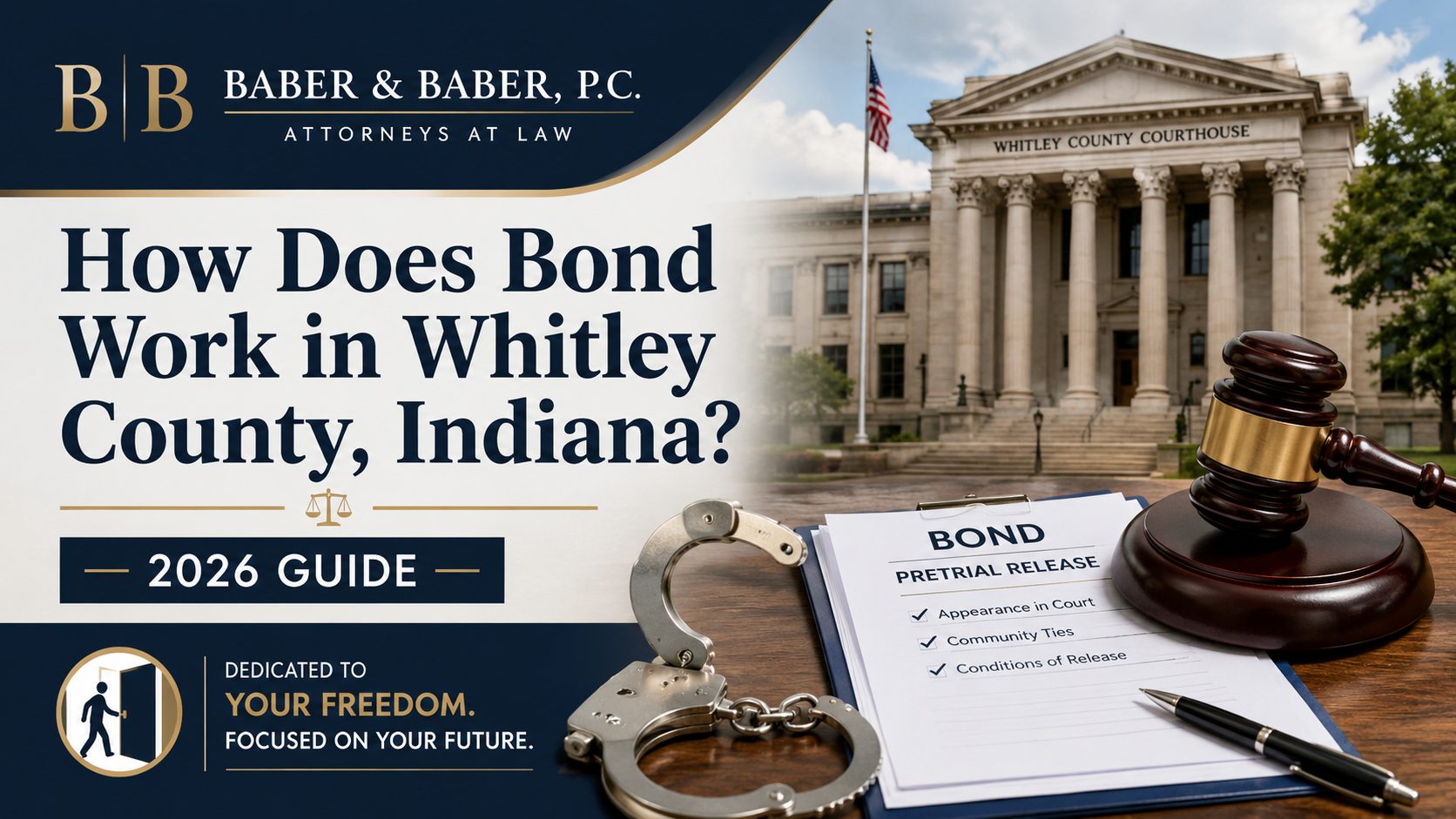
How Does Bond Work in Whitley County, Indiana? (2026 Guide)
This guide explains how bond generally works in Whitley County criminal cases and what families should understand after an arrest.
When someone is arrested in Whitley County, one of the first questions family members usually ask is:
“How do we get them out of jail?”
That question usually leads to bond.
Bond can be confusing, especially if this is the first time you or someone you care about has been involved in the criminal justice system.
People often want to know:
- How is bond set?
- Can someone bond out right away?
- What does the money go toward?
- What happens if bond conditions are violated?
- Can bond be reduced?
This is what we will address in this guide.
What Is Bond?
Bond is part of the pretrial release process.
In simple terms, bond is a way for the court to allow someone charged with a crime to be released from jail while the case is pending.
Bond is not the same thing as a sentence.
It does not mean the person is guilty.
It is about whether the person can be released before the case is resolved and what conditions must be followed while the case is pending.
What Happens After Someone Is Arrested in Whitley County?
After an arrest in Whitley County, the person may be taken to the Whitley County Jail for booking.
Booking may include:
- Fingerprinting
- Mugshot
- Property inventory
- Basic processing
- Entry into the jail system
After booking, the next major question is whether the person can be released and under what conditions.
Depending on the charge and circumstances, release may happen relatively quickly, or the person may need to wait for a court hearing.
Who Sets Bond?
Bond is typically set by the court.
The court may consider several factors, including:
- The nature of the charge
- Prior criminal history
- Failure-to-appear history
- Public safety concerns
- Whether the person is already on probation, bond, or pretrial release
- The person’s ties to the community
In some cases, bond may be addressed quickly.
In other cases, the person may need to appear before a judge before release conditions are determined.
Does Everyone Have to Pay Money to Get Out of Jail?
Not always.
Indiana’s pretrial release system allows courts to consider whether a person can be released without money bail, depending on risk factors and the circumstances of the case.
That does not mean everyone is automatically released.
It also does not mean money bond never applies.
Instead, the court looks at the situation and determines what conditions are appropriate.
Common Types of Release in Indiana Criminal Cases
Every case is different, but release may involve one or more of the following.
Own Recognizance Release
Sometimes called “OR” release, this means the person is released without posting money, based on a promise to appear in court and follow all conditions.
Cash Bond
A cash bond requires money to be posted with the court.
Depending on the case and court order, some or all of that money may later be applied to court costs, fines, fees, or other obligations if there is a conviction.
Surety Bond
A surety bond usually involves working with a licensed bail bond company.
In Whitley County, this usually applies to someone getting arrested in Whitley County who lives out of state.
The bonding company posts the bond, and the person or family typically pays the bonding company a fee.
Ten Percent Cash Bond
In some cases, the court may allow a person to post a percentage of the full bond amount with the clerk.
Whether this is available depends on the court’s order.
A Ten Percent Cash Bond is common in Whitley Superior Court cases if the person lives within the State.
Bond Conditions Matter
Getting released from jail is only part of the issue.
The court may also impose bond conditions.
These may include:
- Appearing at all court dates
- Not committing new offenses
- No contact with certain people
- No alcohol or drugs
- Compliance with testing
- Travel restrictions
- Firearm restrictions, depending on the case
- Other case-specific requirements
Bond conditions are serious.
Violating them can create major problems.
What Happens If Someone Violates Bond Conditions?
If someone violates bond conditions, the court may:
- Revoke bond
- Increase bond
- Issue a warrant
- Add new conditions
- Order the person back into custody
In Whitley County, many violations turn into a revocation of bond.
Common bond violations include:
- Missing court
- Contacting someone when a no-contact order is in place
- Failing a drug or alcohol test
- Picking up a new charge
- Leaving the area without permission, if restricted
The safest approach is to take every bond condition seriously from the beginning.
Can Bond Be Reduced?
Sometimes.
A person may be able to ask the court to modify or reduce bond.
Whether that request is successful depends on the facts of the case.
The court may consider:
- The charge
- The person’s criminal history
- Community ties
- Employment
- Family responsibilities
- Prior court appearance history
- Safety concerns
- Whether less restrictive conditions could address the court’s concerns
A bond reduction is not automatic, but it may be worth evaluating in the right case.
Also, be aware that if you ask the Court for a bond reduction, the Judge also has the authority to raise the bond instead in certain situations.
What If the Person Has a Warrant?
If someone is arrested on a warrant, bond may depend on the type of warrant and the reason it was issued.
For example, a warrant for missing court may be treated differently than a warrant connected to a new criminal charge.
If a person missed court, the court may want to know why before deciding whether release is appropriate.
What Families Should Do After an Arrest
Families often want to help immediately, but it is important to stay calm and gather accurate information.
Helpful steps may include:
- Confirming where the person is being held
- Finding out whether bond has been set
- Reviewing any paperwork carefully
- Paying attention to court dates
- Avoiding public posts about the case
- Encouraging the person not to discuss case details over recorded jail calls
Jail calls are often recorded.
What someone says during those calls can sometimes create additional problems.
What Families Should Avoid
- Calling alleged victims if a no-contact issue may exist
- Posting details about the case online
- Arguing with jail staff or court staff
- Assuming bond means the case is over
- Ignoring future court dates
- Telling the person to “just explain everything” without understanding the risks
Bond gets someone released while the case is pending.
It does not resolve the case itself.
What Happens After Bond Is Posted?
After bond is posted, release may still take time.
The jail may need to complete processing before the person is released.
Once released, the person must follow all bond conditions and appear at future hearings.
The case will then continue through the criminal court process, which may include:
- Initial hearing
- Pretrial conferences
- Evidence review
- Negotiations
- Motions
- Trial, if necessary
- Sentencing, if there is a conviction or plea agreement
Why Bond Is Only the First Step
Getting out of jail is important.
But it is only the beginning.
The choices made after release can affect the entire case.
That includes:
- Whether the person appears in court
- Whether bond conditions are followed
- Whether new issues arise
- How the case is prepared moving forward
A person released on bond should treat the case seriously from day one.
How Bond Issues Come Up in Whitley County Criminal Cases
Criminal cases in Whitley County may involve charges such as:
- OWI
- Battery
- Domestic battery
- Theft
- Drug possession
- Probation violations
- Driving offenses
- Felony charges
- Misdemeanor charges
Bond and release conditions may vary depending on the specific allegation and the person’s history.
Local procedures matter, which is why understanding how cases move through Whitley County can be important.
Final Thoughts
Bond can feel confusing when someone has just been arrested.
The most important thing to remember is that bond is about release while the case is pending. It is not the final outcome.
If someone you care about has been arrested in Whitley County, understanding bond, release conditions, and the next court date can help prevent mistakes early in the case.
Need Help Understanding a Whitley County Criminal Case?
At Baber & Baber, P.C., we help individuals and families throughout Whitley County understand what happens after an arrest, how bond issues may be handled, and what steps come next in the criminal process.
Whether the case involves an OWI, misdemeanor, felony, probation issue, or another criminal charge, getting clear guidance early can make a difference.
Call us at 260.244.4422 or send us a message online by clicking here for help.