How We Help Clients Keep Driving Legally While Fighting an OWI/DUI in Indiana
One of the biggest fears people have after being charged with an OWI or DUI isn’t just court,
it’s losing the ability to drive.

For many people, driving isn’t optional.
It’s how you get to work, take care of your family, attend medical appointments, and live your daily life.
An OWI charge in Indiana can threaten that independence almost immediately.
At Baber & Baber, P.C., we don’t just fight the charge.
We help clients manage the real-life consequences that come with it.
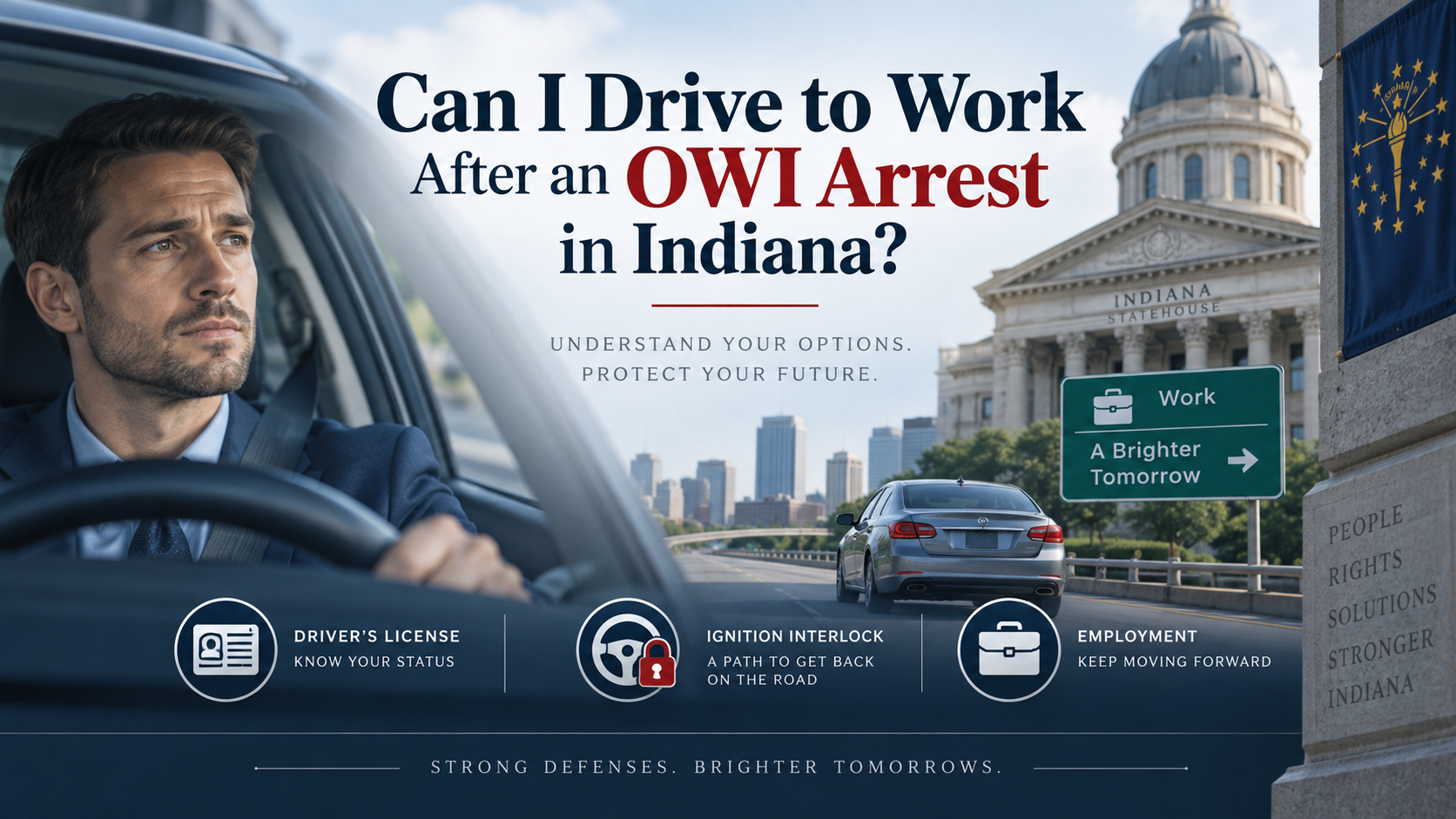
That's why part of our approach is helping clients stay on the road legally whenever possible while their case is moving through the system.
Here’s how that typically works.
First: What Happens to Your License After an OWI Arrest?
In Indiana,
an OWI charge and conviction can trigger two separate issues related to your license:
- Administrative license actions through the Bureau of Motor Vehicles
- Court-ordered restrictions or suspensions
These processes don’t always move at the same speed, and they don’t always have the same solutions.
That’s why it’s important to look at your situation as a whole, not just the criminal charge.
Timing Matters
Your driver's license will be suspended at your Initial Hearing, whether it's a misdemeanor or felony.
However, steps can be taken at the beginning to limit or even avoid a suspension while the case is going through the Court system.
Ignition Interlock Devices (IID): What They Are and How They Help
One tool that often allows people to continue driving legally during an OWI case is an ignition interlock device (IID).
What is an ignition interlock?
An ignition interlock is a breath-testing device installed in your vehicle.
Before the car will start, the driver must provide a breath sample.
If alcohol is detected above a very low threshold, the vehicle won’t start.
Why would someone agree to an IID?
While no one wants an ignition interlock, in many cases it can be the difference between not driving at all and driving legally with restrictions.
Depending on the circumstances, an IID may:
- Allow continued driving during a suspension period
- Satisfy court or BMV requirements
- Reduce the length or severity of license restrictions
- Show proactive compliance, which can matter in court
Not every case requires one, and not every driver qualifies.
But when it is an option, timing and proper setup matter.
Specialized Driving Privileges (SDP): Driving With Court Approval
Indiana law allows some drivers facing OWI-related suspensions to request
specialized driving privileges (often called “hardship” or “restricted” driving).
We keep this intentionally general because every case is different, but in the right situation, these privileges may allow driving:
- To and from work
- For medical appointments
- For school or childcare responsibilities
- For other court-approved purposes
These privileges are not automatic. They require:
- Proper filing
- Court approval
- Compliance with specific conditions
Handled correctly, they can help clients maintain stability while their case is pending.
Why “Driving Legally” Is the Key Phrase
The goal is never to cut corners.
Driving while suspended, even for a good reason, can:
- Create new criminal charges
- Complicate your OWI case
- Eliminate future options for relief
That’s why our focus is on legal, documented, court-approved solutions that protect both your freedom and your long-term case outcome.
What Else Matters While Your Case Is Pending
Keeping your license, or driving legally with restrictions, is often part of a bigger strategy, which may include:
- Evaluating whether administrative suspensions can be challenged
- Understanding how license issues intersect with the criminal case
- Avoiding missteps that can lead to bond violations or additional charges
- Planning ahead for record sealing or expungement when eligible
This is not a one-size-fits-all process.
The Bottom Line
An OWI charge in Indiana doesn’t always mean your life, and your ability to drive, comes to a complete stop.
With the right guidance, many clients are able to:
- Stay on the road legally
- Protect their job and responsibilities
- Navigate the court process with clarity instead of fear
If you’re facing an OWI or DUI and are worried about your ability to drive, getting answers early can make a meaningful difference.
Call us at 260.244.4422 (Phones answered 24/7) or send us a message online by clicking here.