BAC .15 or Higher in Indiana: What Does It Mean for Your OWI Case?
Charged with OWI in Indiana with a BAC of .15 or higher? Learn how the charge, possible penalties, evidence, and license issues may be affected.
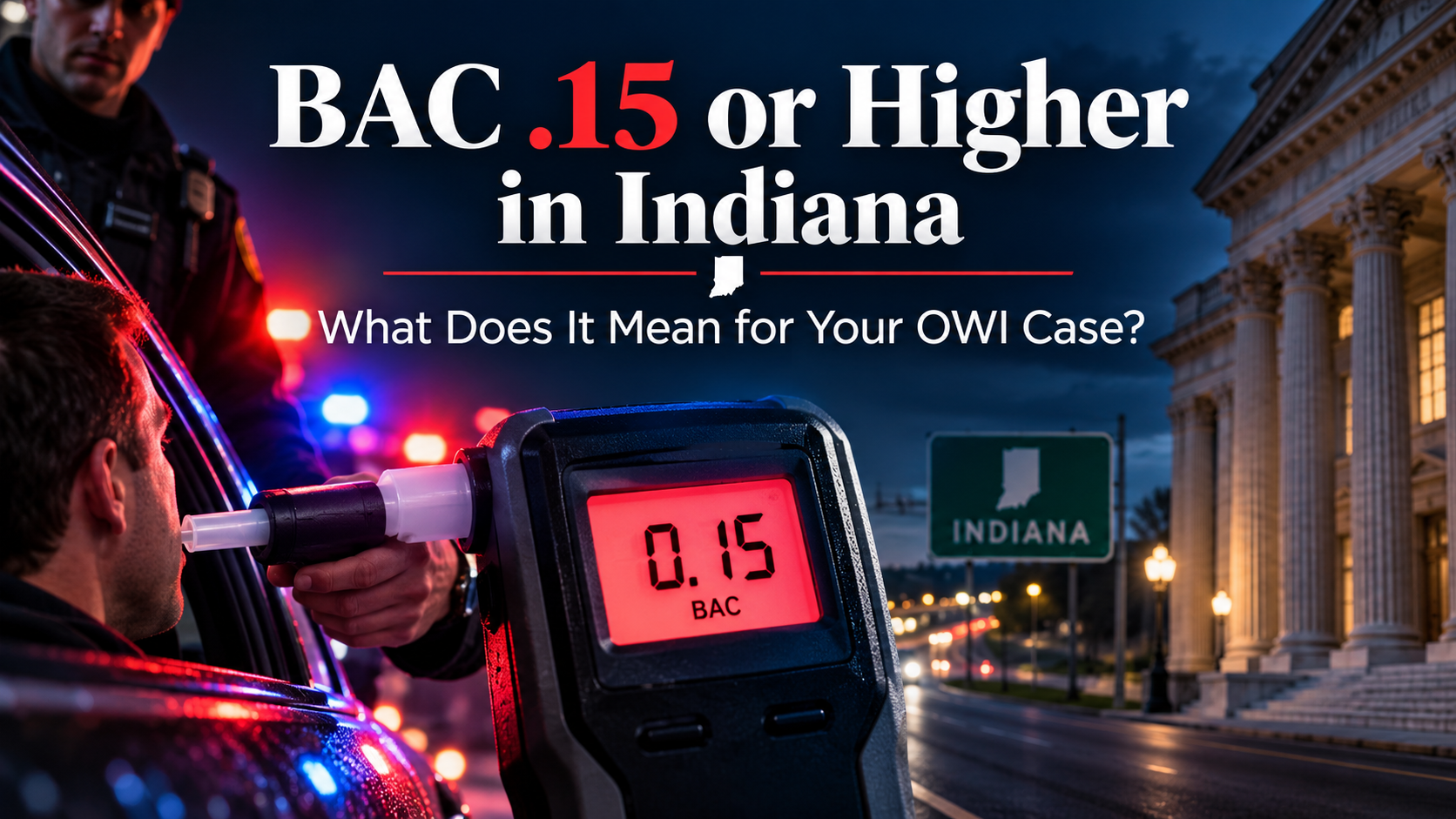
If you were arrested for OWI and your breath or blood test came back at .15 or higher, you may be wondering how much that number changes your case.
In Indiana, it matters.
A BAC of .15 or higher can result in a more serious misdemeanor charge than a BAC between .08 and .15.
But the number is not the only thing that matters.
The evidence still needs to be reviewed.
What Happens at .15 in Indiana?
Indiana law treats operating with an alcohol concentration of at least .08 but less than .15 as a Class C misdemeanor (if no endangerment is alleged).
At .15 or higher, the offense becomes a Class A misdemeanor, even if the person wasn't driving in a manner that endangered themselves or someone else on the roadway.
That increases the potential penalties.
A Class A misdemeanor can carry up to one year in jail and a fine of up to $5,000.
Those are maximum penalties, not an automatic sentence.
Does a .15 BAC Mean I Am Going to do more jail time?
Not automatically.
The outcome of an OWI case depends on more than one number.
The court may consider things such as:
- Whether this is your first OWI
- Your prior criminal history
- How you were driving
- Whether there was an accident
- Whether anyone was injured
- Whether there were passengers
- Your test results
- The other evidence in the case
Prior OWI convictions can also significantly change the level of the charge.
For example, Indiana law can elevate an OWI to a Level 6 felony when there is a qualifying prior OWI conviction within the previous seven years.
Does a High BAC Mean There Is No Defense?
No.
A .15 or higher test result is important evidence, but the result should still be reviewed along with the rest of the case.
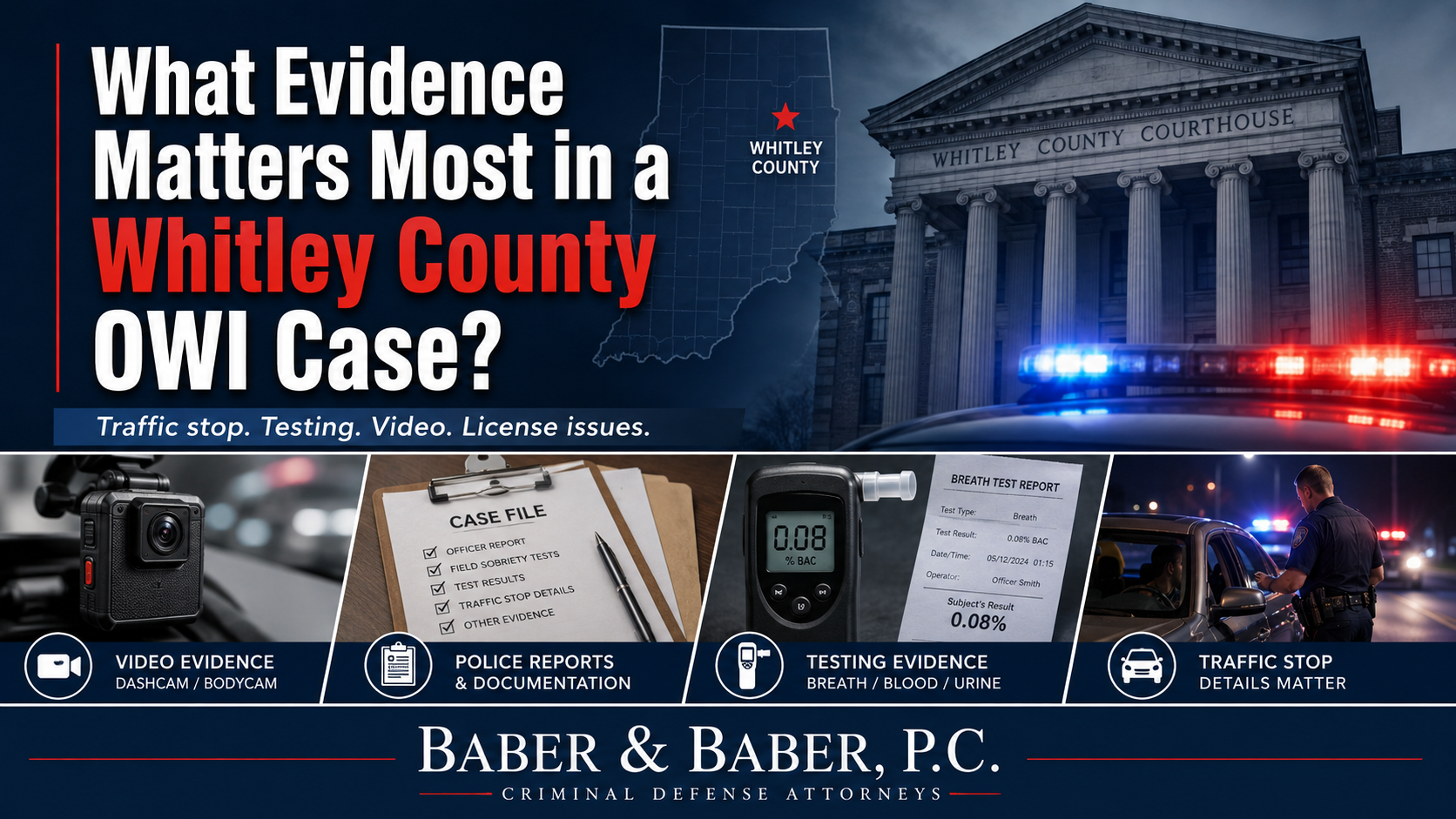
Questions may include:
- Was the traffic stop legal?
- What does the body camera footage show?
- When was the chemical test performed?
- Were testing procedures followed?
- What did the officer observe?
- Do the video and police report match?
- Are there issues involving the breath or blood test?
A high number does not mean those questions stop mattering.
What About My Driver's License?
An OWI arrest can also affect your ability to drive.
Indiana BMV guidance states that a failed chemical test may result in a suspension of driving privileges for up to 180 days.
Depending on the situation, specialized driving privileges or ignition interlock may also become part of the case.
That is why you should not simply assume you can drive because you still have your physical license.
You should know your actual license status.
What About a .15 OWI in Whitley County?
In our experience, Whitley County takes OWI cases seriously.
You should not assume that a first offense will automatically receive an easy outcome or that something that happened in another Indiana county will happen here.
A .15 or higher result makes it even more important to understand the evidence, your license situation, and the realistic options available in your case.
Charged With OWI in Whitley County?
At Baber & Baber, P.C., we help clients in Whitley County and Northeast Indiana understand their OWI charges, review the evidence, address license issues, and determine what options may be available.
We help keep you driving legally while fighting your OWI/DUI.
Call us at 260.244.4422 (Phones answered 24/7) or send us a message online by clicking here.