Can I Keep Driving After an OWI in Indiana? Ignition Interlock Explained
After an OWI arrest in Indiana, your license may be affected quickly. Learn how ignition interlock and legal driving options may apply.

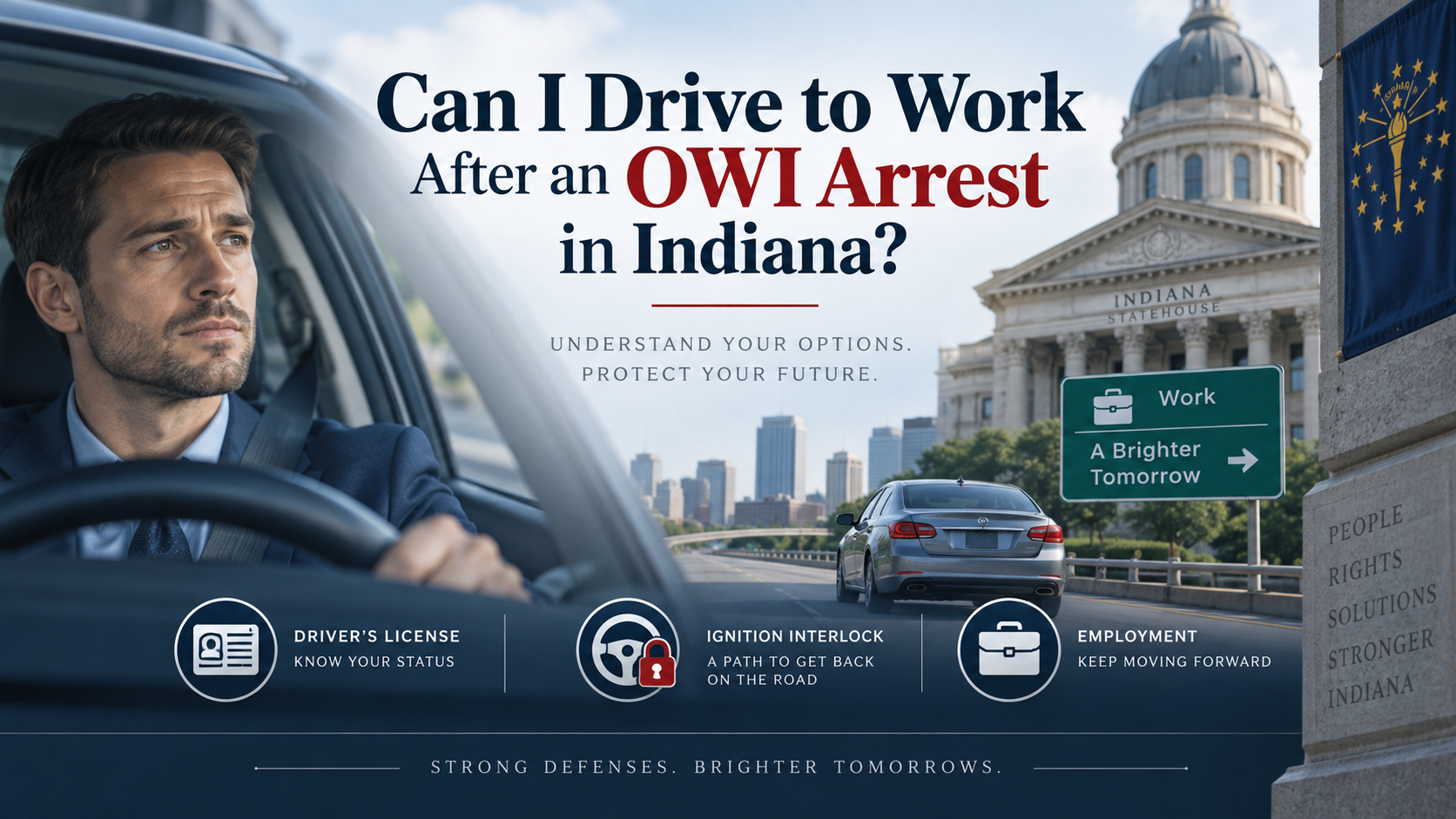
After an OWI arrest, one of the first questions people ask is:
“Can I still drive?”
That question matters.
For most people, driving is not optional.
You need to get to work. You need to take care of your family. You need to get to court. You need to keep life moving.
In some Indiana OWI cases, an ignition interlock device may be part of the answer.
But it is not automatic in every case, and it is not something you should guess about.
What Is an Ignition Interlock Device?
An ignition interlock device is a breath-testing device installed in a vehicle.
Before the vehicle starts, the driver has to blow into the device.
If alcohol is detected, the vehicle may not start.
In an OWI case, ignition interlock may be used as a way to allow someone to drive legally under certain conditions.
That does not mean you can drive without restrictions.
It means the court may allow driving if the proper steps are followed.
Do You Automatically Get An Ignition Interlock Device After an OWI?
Not always.
Whether ignition interlock applies depends on the facts of your case.
Important factors for the Court to consider may include:
- Whether this is your first OWI
- Whether there was a prior OWI
- Whether there was a refusal
- Whether your license is suspended from another matter
- Whether you cooperated with law enforcement
This is why you should not assume anything about your license after an OWI arrest.
Just because you still have your physical license does not mean you are legally allowed to drive.
And just because you were arrested for OWI does not automatically mean you have no driving options.
When Might Ignition Interlock Come Up?
Ignition interlock may become part of the conversation when there are license consequences connected to your OWI case.
That may include situations involving:
- BMV imposed probable cause suspension
- A court-ordered suspension
- Specialized driving privileges
The key point is simple:
If ignition interlock is required, you need to follow the rules.
Driving without following the proper court order, BMV requirements, or license restrictions can make your situation worse.
Ignition Interlock and Specialized Driving Privileges
Specialized driving privileges may allow a person to drive for certain approved purposes while their license is otherwise suspended.
For many people, this is extremely important.
It may allow driving for things like work, school, medical appointments, treatment, or other court-approved reasons.
In some cases, ignition interlock may be required as part of those privileges.
That means you may be able to keep driving legally, but only if the correct process is followed.
Do Not Guess About Your License
This is one of the biggest mistakes people make after an OWI arrest.
They guess.
They assume they can drive because no one told them otherwise.
Or they assume they cannot drive at all and do nothing.
Both can create problems.
If you drive when you are not legally allowed to drive, you may face additional consequences.
If you wait too long to ask about legal driving options, you may create unnecessary stress for yourself, your job, and your family.
The better approach is to find out early.
Why This Matters in Whitley County
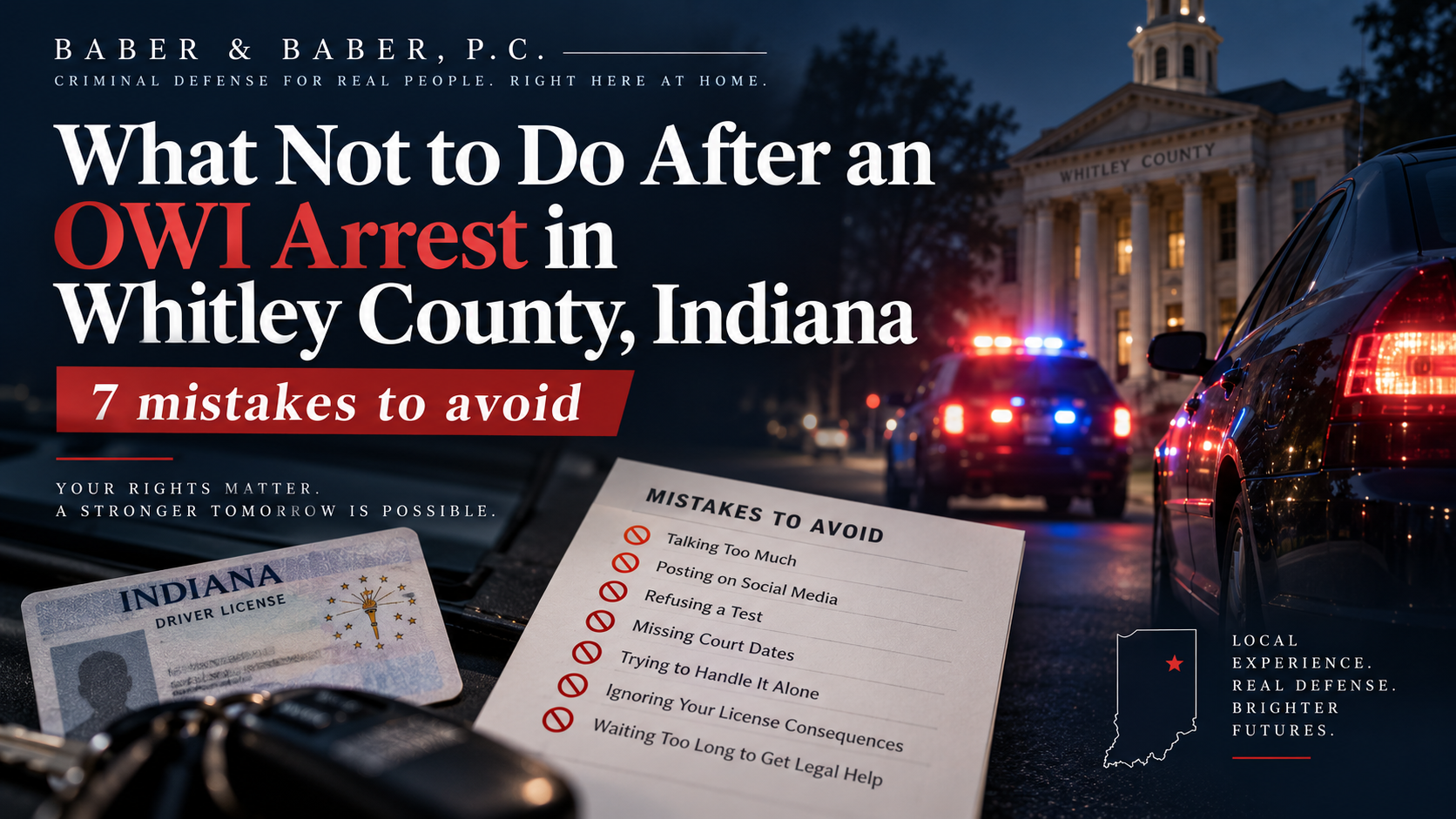
In our experience, Whitley County is tough on OWI cases.
That does not mean every case has the same result.
But it does mean you should not assume your case will be handled casually.
You should know:
- Whether you can legally drive
- Whether ignition interlock may apply
- Whether specialized driving privileges are an option
- What your court obligations are
- What could make your situation worse
Local experience matters because the court where your case is pending matters.
Need Help After an OWI Arrest?
At Baber & Baber, P.C., we help clients in Whitley County and Northeast Indiana understand OWI charges, license consequences, ignition interlock, specialized driving privileges, and defense options.
If you were arrested for OWI, do not wait until your first court date to figure out whether you can legally drive.
Call us at 260.244.4422 (Phone answered 24/7) or send us a message by clicking here to see what your options are.