
Can I Ask for a Bond Reduction in Indiana?
Zach Baber • July 25, 2025
In this article, we’ll break down what the law says on bond reductions and what it means in practical terms for someone facing criminal charges.
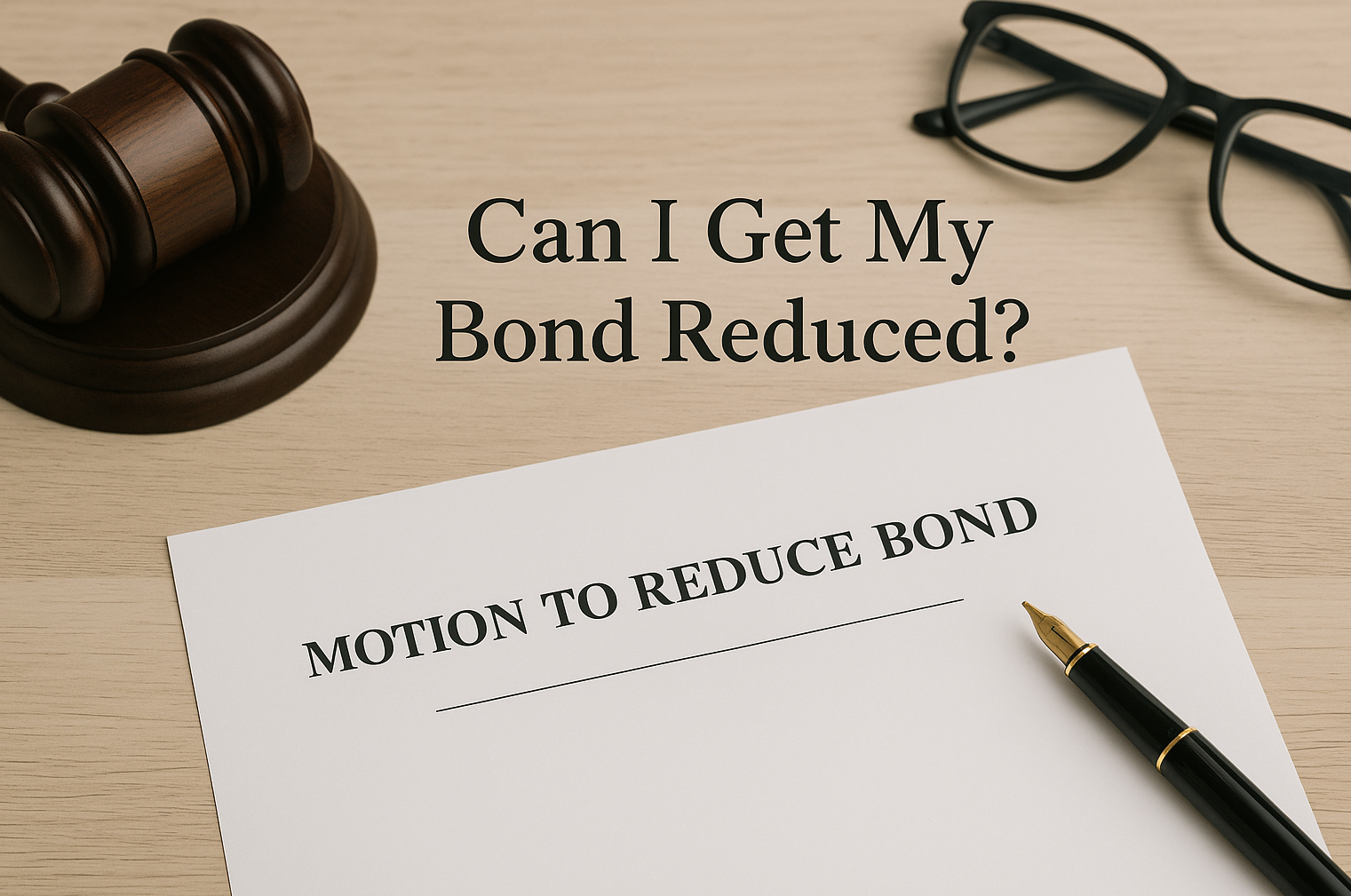
When someone is arrested and granted bail in Indiana, that initial bail amount isn’t necessarily set in stone.
Under Indiana Code § 35-33-8-5, a defendant has the legal right to ask the court for a bond reduction, but only under certain conditions.
You Can Request a Bail Reduction, But You Need a Good Reason
The law allows either the state or the defendant to request a change in the bail amount if there is “good cause.”
For a defendant, that usually means you’ve gathered new information or evidence that wasn’t available when the original bond was set.
This request is called a motion to reduce bond, and the court will only consider it if you provide valid, reasonable evidence.
What Counts as Good Cause?
To be successful in a motion to reduce bond, you need to show what the law calls “substantial mitigating factors.”
These are things that might make the court more confident you’ll appear for trial and don’t pose a risk to the community.
- Ties to the community (such as a job, family, or long-term residence)
- Lack of prior criminal history
- Evidence of cooperation with law enforcement
- Stable living situation
- Willingness to follow release conditions
When Bail Can’t Be Reduced
Even if you present strong reasons, the court cannot reduce your bail if it finds by clear and convincing evidence that you pose a risk to the physical safety of another person or the community.
This might include:
- Past violent behavior
- Threats to witnesses
- Serious charges that suggest danger to the public
If these kinds of risks are present, the court is more likely to maintain or even increase your bond amount.
Credible Hearsay Is Allowed
An important detail from the statute: the court may accept credible hearsay evidence when reviewing a request for bond reduction.
This means that not everything needs to be proven through formal testimony.
Example: letters, statements, or reports might be considered.
Final Thoughts
If you or a loved one is trying to reduce bond after an arrest in Indiana, it's not just about asking nicely, you need to show evidence that supports your request.
Understanding your rights under IC 35-33-8-5 is a powerful first step.
If you’re unsure how to begin or whether your situation qualifies, consider speaking to a local defense attorney who can walk you through the process and help you present your case effectively.
You can call us at 260.244.4422 or click here to schedule a consultation.
This post is for educational purposes only and not meant as specific legal advice.
Can marijuana lead to an OWI in Indiana? Learn how blood tests, driving behavior, officer observations, and video evidence may matter.
Can prescription medication lead to an OWI in Indiana? Learn how impairment, blood testing, officer observations, and video evidence may matter.
Can you get an OWI in Indiana with a BAC under .08? Learn how impairment, officer observations, video, and other evidence may still matter.
BAC .15 or higher in Indiana can lead to a more serious OWI charge. Learn what it may mean for penalties, your license, and your defense.

Arrested for OWI in Whitley County? Learn 7 mistakes to avoid involving driving, court, bond conditions, evidence, and social media.

Can you drive to work after an OWI arrest in Indiana? Learn how license status, specialized driving privileges, and interlock may apply.

Learn whether you may be able to keep driving after an OWI in Indiana, including ignition interlock, license issues, and legal driving options.

Charged with OWI in Whitley County? Learn what evidence may matter, including the stop, testing, body cam footage, and license issues.

Whitley County can be tough on OWI cases. Learn why local experience matters and what to consider after an OWI arrest.

Arrested for OWI in Whitley County? Learn what to do in the first 24 hours, including court dates, license issues, and next steps.
