Can Prescription Medication Lead to an OWI in Indiana?
A valid prescription does not automatically prevent an OWI charge in Indiana. Learn what evidence police may use in medication-related cases.
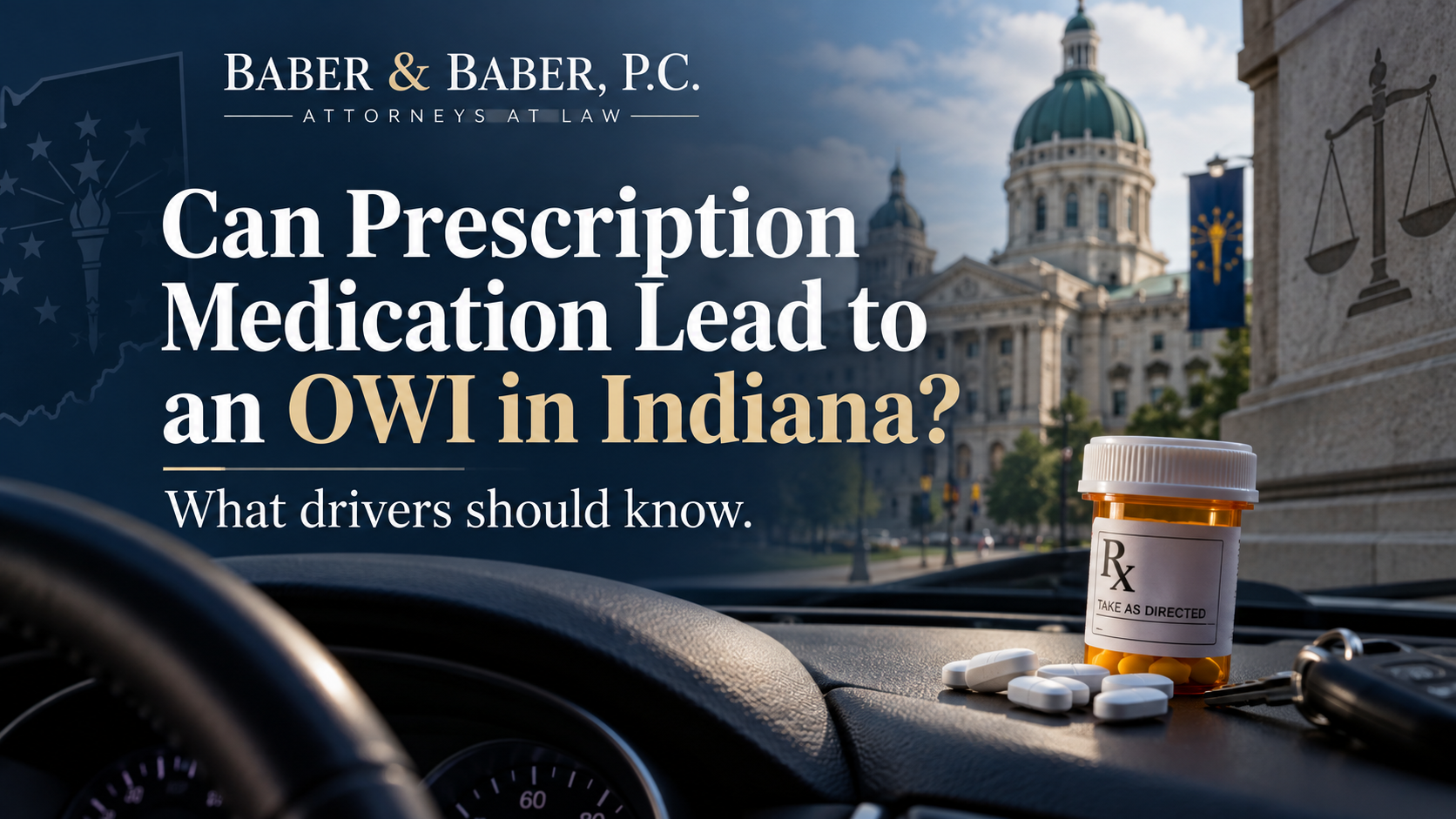
A person can potentially face an OWI charge in Indiana even when the medication was legally prescribed.
The important question is not simply whether you had a prescription.
The question is whether the medication allegedly impaired your ability to safely operate a vehicle.
A Prescription Does Not Automatically Prevent an OWI
Indiana's definition of intoxication includes being under the influence of a drug when it causes an impaired condition of thought and action and a loss of normal control of a person's faculties.
That means a legally prescribed medication can still become part of an OWI case if police believe it affected your ability to drive.
What Evidence Might Police Use?
Prescription-medication OWI cases can look very different from alcohol cases.
There may be no .08 BAC number.
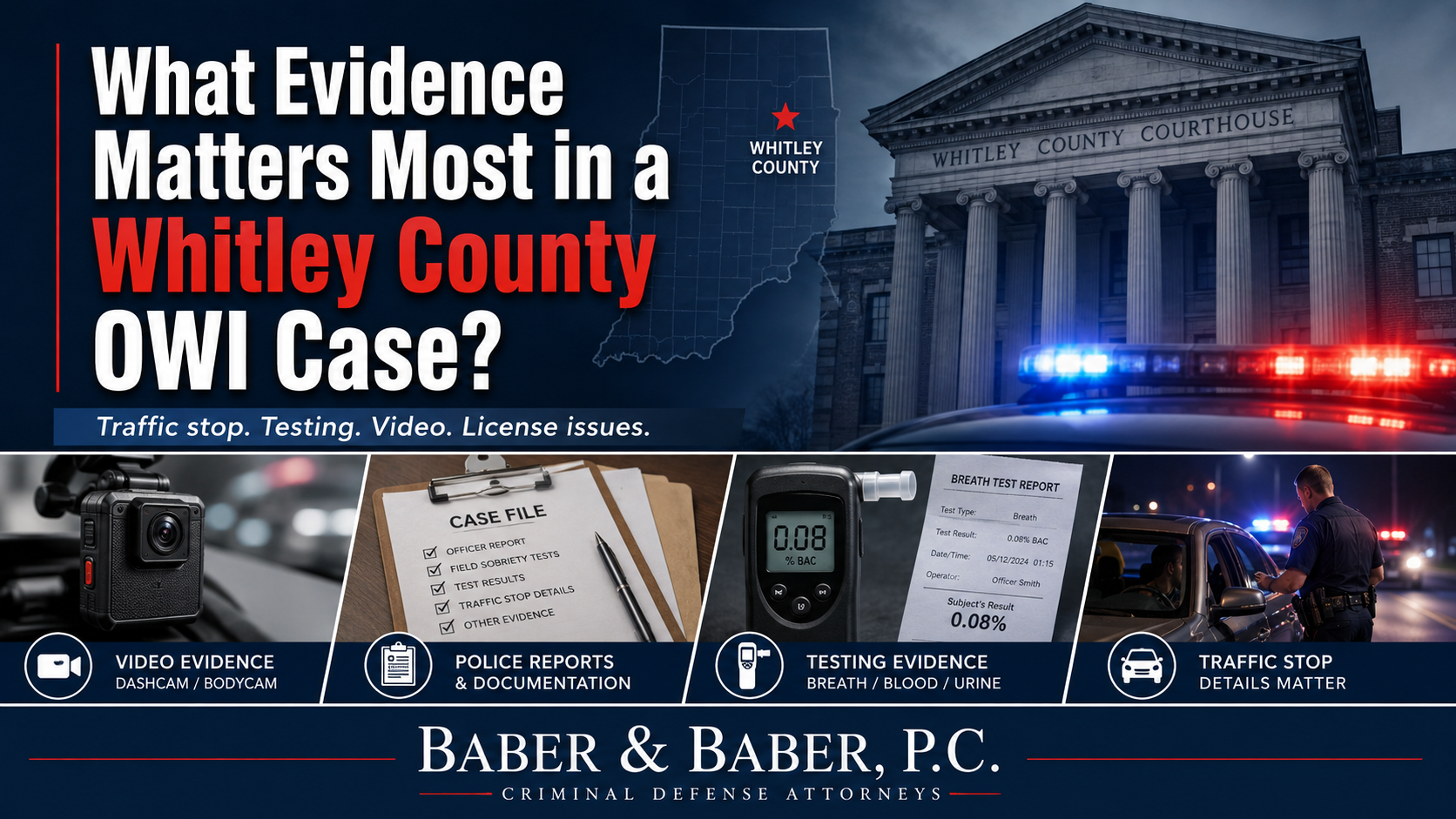
Instead, police may rely on things such as:
- Driving behavior
- Officer observations
- Slurred speech
- Balance or coordination
- Field sobriety tests
- Statements about medication
- Body camera or dash camera footage
- Blood testing
- The medication found in your system
That makes the surrounding evidence especially important.
What If I Took the Medication Exactly as Prescribed?
That can matter, but it does not automatically end an impairment-based OWI case.
Indiana does provide a prescription defense to a separate offense involving certain Schedule I or II controlled substances or their metabolites being present in a person's blood when the substance was taken according to a valid prescription.
But an allegation that someone was actually intoxicated or impaired is a different issue.
That is why the exact charge and evidence need to be reviewed carefully.
What About Mixing Medication With Alcohol?
Combining prescription medication with alcohol can create additional impairment concerns.
Indiana's definition of intoxication specifically includes combinations of alcohol, controlled substances, and other drugs when they produce the required level of impairment.
In those cases, police may look at the entire situation rather than focusing on one substance.
Why Video and Blood Testing Matter
Drug OWI cases can depend heavily on the evidence.
A blood test may show that a medication was present, but the rest of the investigation still matters.
Body camera footage may show how someone was speaking, walking, following instructions, and interacting with the officer.
Important questions may include:
- What medication was involved?
- Was it prescribed?
- When was it taken?
- What did the blood test show?
- What does the video show?
- How was the person actually driving?
- Do the officer's observations match the footage?
What About Whitley County?
In our experience, Whitley County takes OWI cases seriously.
You should not assume a case will disappear simply because the medication was legally prescribed.
At the same time, the State still has to rely on evidence.
A prescription-drug OWI should be evaluated based on the specific medication, the alleged impairment, the blood results, the driving behavior, and the rest of the investigation.
Charged With OWI in Whitley County?
At Baber & Baber, P.C., we help clients in Whitley County and Northeast Indiana understand OWI charges involving alcohol, prescription medication, and other substances.
We review the evidence, address license issues, and help clients understand the options available in their case.
We help keep you driving legally while fighting your OWI/DUI.
Call us at 260.244.4422 (Phones answered 24/7) or send us a message online by clicking here.