
How Long Does Expungement Take in Indiana? (2026 Guide)
Zach Baber • March 18, 2026
In this guide, we break down what to expect when filing for expungement in Indiana, including realistic timelines and what can affect your case.
One of the most common questions people ask about expungement is simple:
“How long does it take?”
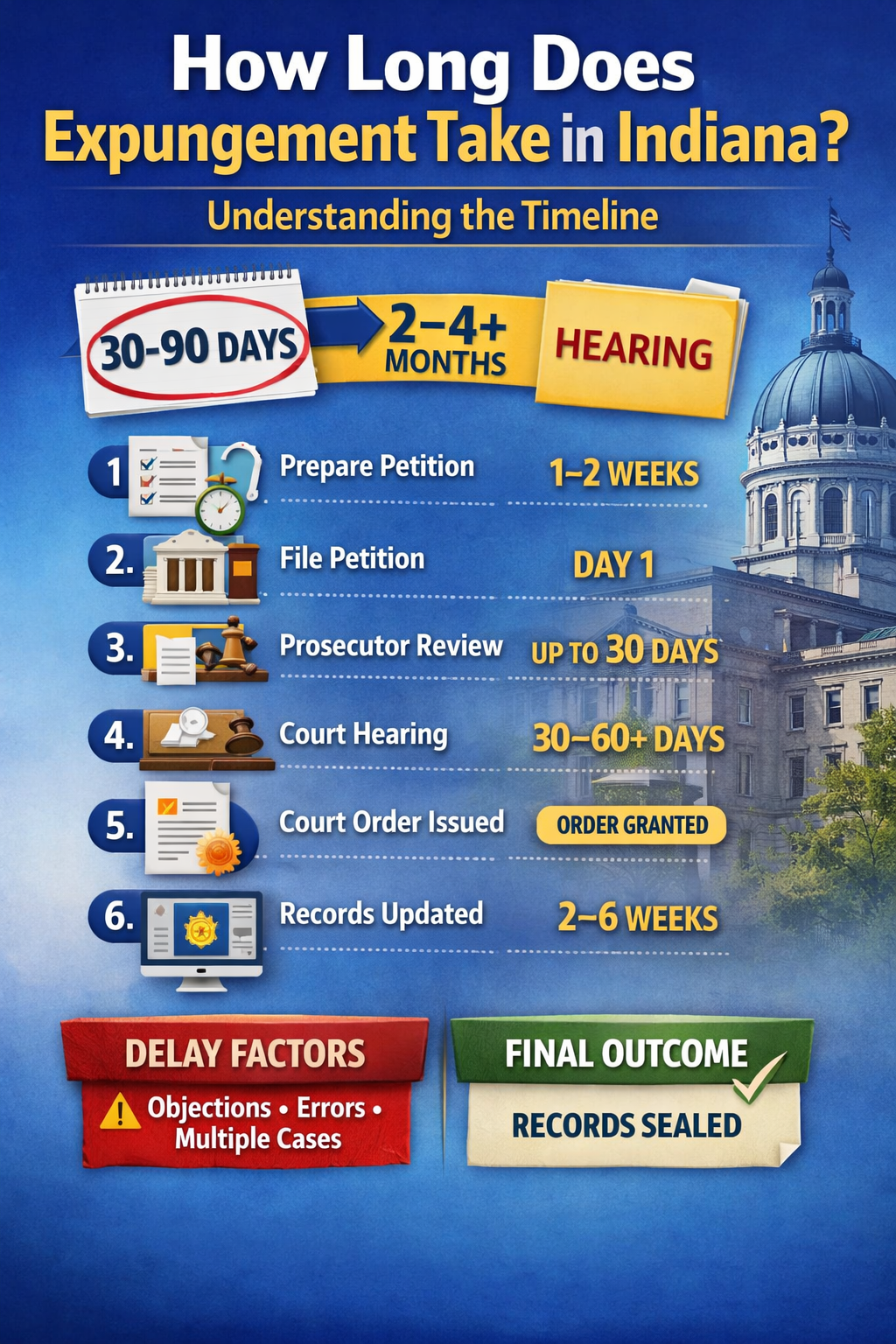
The answer depends on several factors, including the type of case (such as a level 6 felony OWI/DUI conviction or a higher level felony), whether the prosecutor objects, and how quickly the court processes the petition.
The Short Answer
In many cases, expungement in Indiana takes:
👉 30 to 90 days if everything goes smoothly
👉 2 to 4+ months if there is an objection or hearing
Some cases may take longer depending on the court and complexity.
Step-by-Step Timeline of the Expungement Process
Understanding the process helps explain the timeline.
1. Preparing the Petition (1–2 Weeks)
Before anything is filed, the petition must be prepared correctly.
This includes gathering:
2. Filing the Petition (Day 1)
The petition is filed in the court where the conviction occurred.
At this point:
Typically, after filing, the prosecutor is given 30 days to respond.
There are two possibilities:
This adds time to the process.
4. Court Review or Hearing (30–60+ Days)
If there is no objection, the court may rule relatively quickly.
5. Court Order Issued
If the petition is granted, the court issues an order of expungement.
This order may direct agencies to:
Even after the court grants expungement, it takes time for all agencies to update their records.
During this time, records may still appear in some background checks until fully updated.
What Can Slow Down an Expungement?
Several factors can extend the timeline:
1. Incomplete or Incorrect Petition
Missing information or errors can delay the process or result in denial.
2. Prosecutor Objection
If the prosecutor objects, a hearing is required which adds time.
3. Court Scheduling
Some courts process expungements faster than others.
Local practices in counties like Whitley County can affect timing.
4. Multiple Cases or Counties
If someone has convictions in multiple counties, separate filings may be required.
5. Complex Criminal History
Cases involving multiple convictions or collateral actions may take longer to process.
When Does Expungement “Take Effect”?
This is important.
Expungement is not immediate the moment the order is signed.
Instead:
Can Expungement Be Faster?
In some situations, the process may move more quickly if:
The Most Important Factor: Doing It Right the First Time
Indiana expungement law allows only one opportunity in most cases.
That means:
Accuracy matters more than speed.
Final Thoughts
Expungement in Indiana is not instant, but for many people, it is absolutely worth the wait.
Most cases take a few months, depending on the circumstances.
Understanding the process, preparing correctly, and avoiding delays can make a significant difference.
Considering Expungement?
If you are thinking about expungement and want to understand your timeline, eligibility, and next steps, it’s important to evaluate your situation carefully.
At Baber & Baber, P.C., we help individuals in Whitley County and Northeast Indiana navigate the expungement process with clarity and attention to detail.
“How long does it take?”
The answer depends on several factors, including the type of case (such as a level 6 felony OWI/DUI conviction or a higher level felony), whether the prosecutor objects, and how quickly the court processes the petition.
The Short Answer
In many cases, expungement in Indiana takes:
👉 30 to 90 days if everything goes smoothly
👉 2 to 4+ months if there is an objection or hearing
Some cases may take longer depending on the court and complexity.
Step-by-Step Timeline of the Expungement Process
Understanding the process helps explain the timeline.
1. Preparing the Petition (1–2 Weeks)
Before anything is filed, the petition must be prepared correctly.
This includes gathering:
- Case numbers
- Dates of conviction
- A full list of criminal history
- Address history
- Required statements under Indiana law
2. Filing the Petition (Day 1)
The petition is filed in the court where the conviction occurred.
At this point:
- A filing fee is typically required
- The petition must be verified (sworn under oath)
- The prosecutor must be served with a copy
Typically, after filing, the prosecutor is given 30 days to respond.
There are two possibilities:
- No Objection (If the prosecutor does not object, the court may grant the expungement without a hearing)
- Objection Filed
This adds time to the process.
4. Court Review or Hearing (30–60+ Days)
If there is no objection, the court may rule relatively quickly.
If there is a hearing:
- The court must schedule it (often 30 to 60 days out)
- Evidence may be presented
- The judge will decide whether the legal requirements are met
If the petition is granted, the court issues an order of expungement.
This order may direct agencies to:
- Seal or mark court records as expunged
- Restrict access to criminal records
- Update the Indiana State Police database
Even after the court grants expungement, it takes time for all agencies to update their records.
This may include:
- Courts
- Indiana State Police
- Bureau of Motor Vehicles
- Law enforcement agencies
- Community Corrections
What Can Slow Down an Expungement?
Several factors can extend the timeline:
1. Incomplete or Incorrect Petition
Missing information or errors can delay the process or result in denial.
2. Prosecutor Objection
If the prosecutor objects, a hearing is required which adds time.
3. Court Scheduling
Some courts process expungements faster than others.
Local practices in counties like Whitley County can affect timing.
4. Multiple Cases or Counties
If someone has convictions in multiple counties, separate filings may be required.
5. Complex Criminal History
Cases involving multiple convictions or collateral actions may take longer to process.
When Does Expungement “Take Effect”?
This is important.
Expungement is not immediate the moment the order is signed.
Instead:
- The court issues the order
- Agencies must process and update records
- Databases are updated over time
Can Expungement Be Faster?
In some situations, the process may move more quickly if:
- The petition is properly prepared
- All eligibility requirements are clearly met
- The prosecutor does not object
The Most Important Factor: Doing It Right the First Time
Indiana expungement law allows only one opportunity in most cases.
That means:
- Filing too early
- Leaving out eligible cases
- Submitting incomplete information
Accuracy matters more than speed.
Final Thoughts
Expungement in Indiana is not instant, but for many people, it is absolutely worth the wait.
Most cases take a few months, depending on the circumstances.
Understanding the process, preparing correctly, and avoiding delays can make a significant difference.
Considering Expungement?
If you are thinking about expungement and want to understand your timeline, eligibility, and next steps, it’s important to evaluate your situation carefully.
At Baber & Baber, P.C., we help individuals in Whitley County and Northeast Indiana navigate the expungement process with clarity and attention to detail.
If you are ready to take the next step, we can help you determine what your timeline may look like.
Send us a message by clicking here
to see if you are eligible for an expungement.

Learn whether you may be able to keep driving after an OWI in Indiana, including ignition interlock, license issues, and legal driving options.

Charged with OWI in Whitley County? Learn what evidence may matter, including the stop, testing, body cam footage, and license issues.

Whitley County can be tough on OWI cases. Learn why local experience matters and what to consider after an OWI arrest.

Arrested for OWI in Whitley County? Learn what to do in the first 24 hours, including court dates, license issues, and next steps.

Learn how a DUI attorney can impact the outcome of a case in Warsaw, IN, with Baber & Baber, P.C. Attorneys at Law. Click here to keep reading.
Arrested for a DUI in Warsaw, IN? Baber & Baber explains booking, hearings, and license suspension. Call for a free consultation.

DUI vs. OWI vs. OVWI in Indiana? Baber & Baber explains the difference. Warsaw DUI Lawyer serving Kosciusko County. Call for a free consultation

Charged with theft in Whitley County? Learn what to expect, including misdemeanor vs. felony theft, jail risk, and possible outcomes.

Learn what happens after a domestic battery charge in Whitley County, Indiana, including court dates, no-contact orders, and possible penalties.
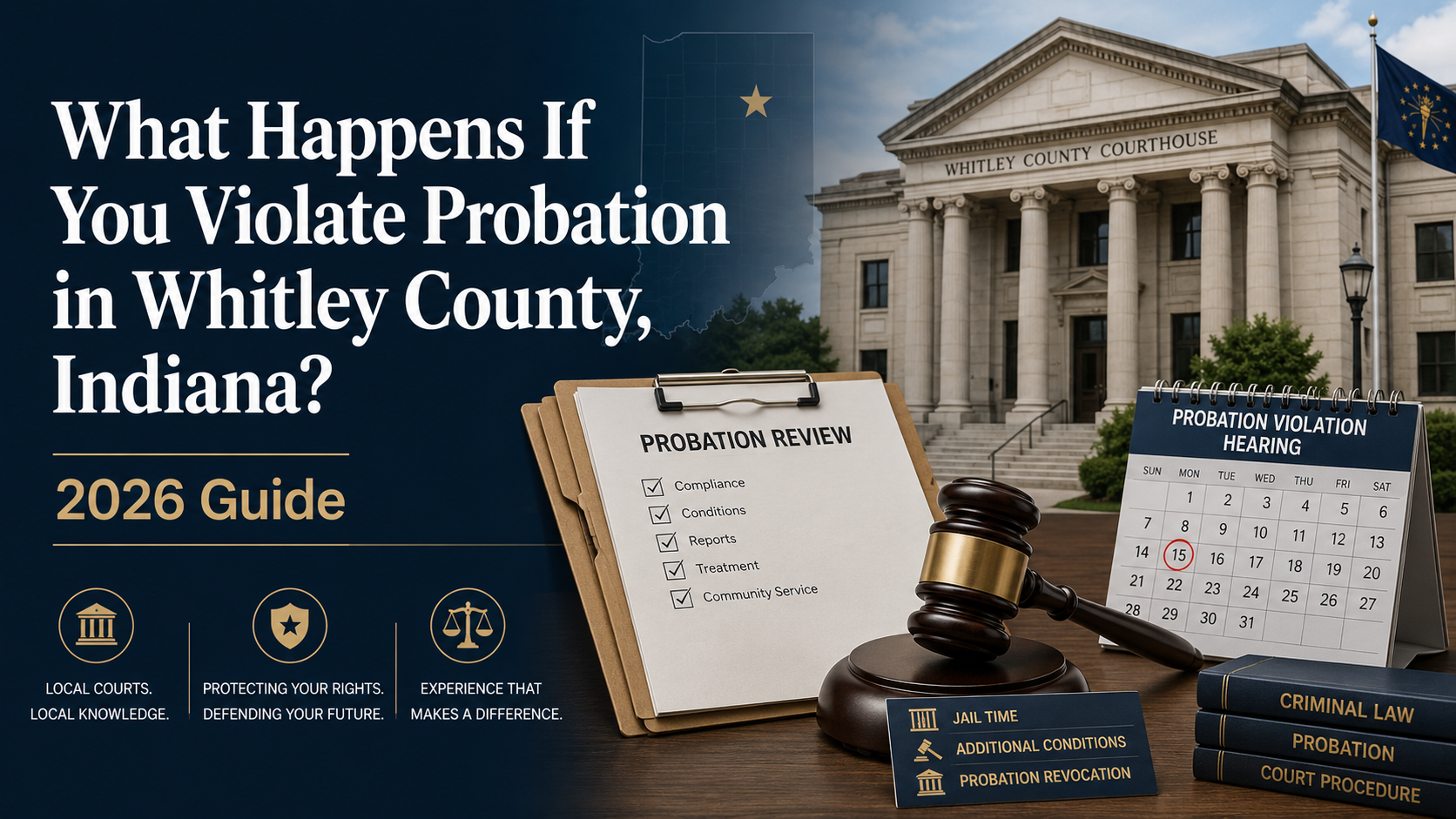
Accused of violating probation in Whitley County? Learn what may happen next, including warrants, jail risk, and suspended sentence issues.
