
Top 3 Mistakes to Avoid When Filing Expungement in Indiana
Zach Baber • May 26, 2025
We will help you avoid these costly mistakes.
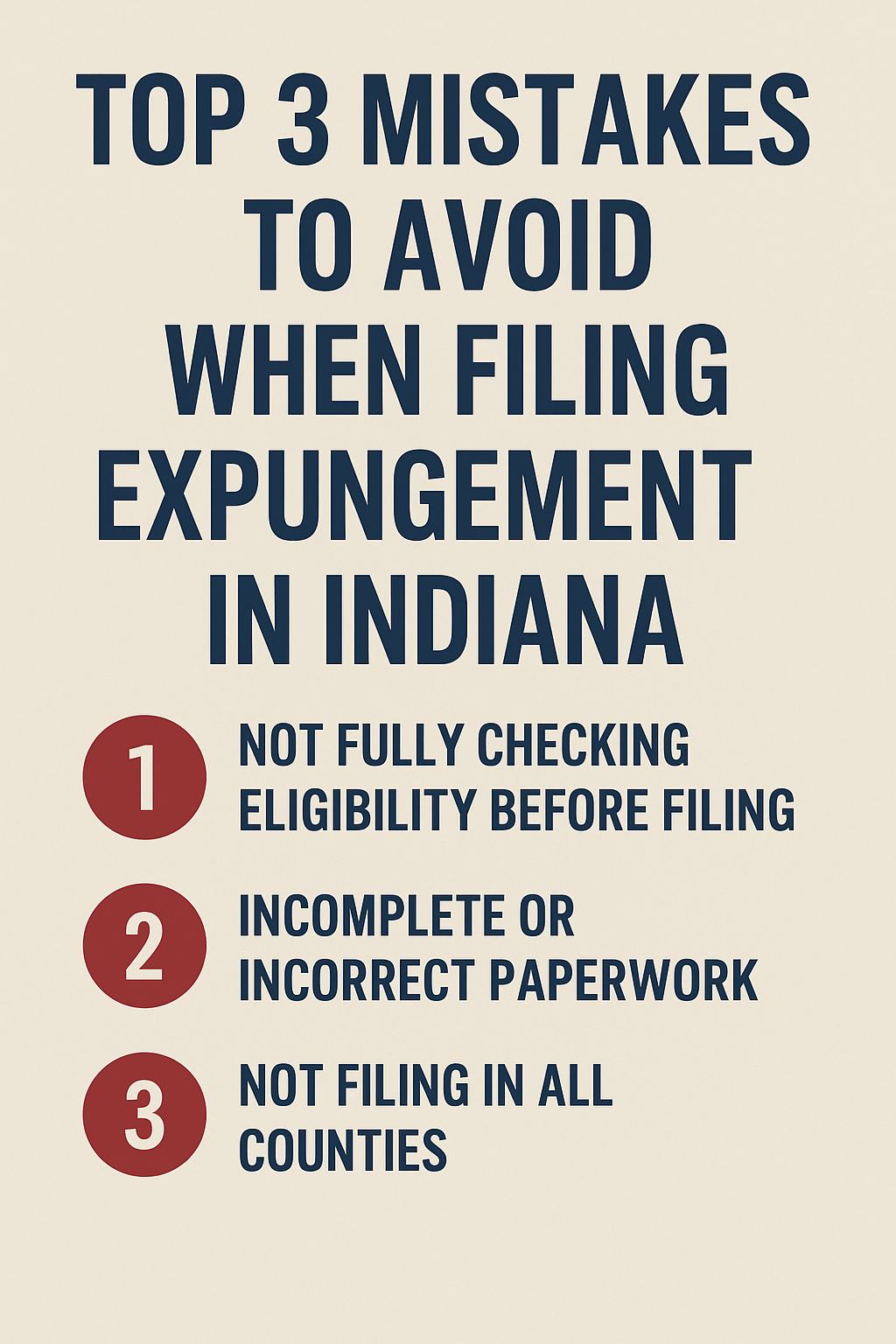
If you're ready to move on from your past and get a fresh start, filing for expungement in Indiana can be a life-changing decision. It allows you to clear or seal your criminal record, making it easier to get a job, find housing, and regain your peace of mind. But even a small mistake during the expungement process can result in delays, or worse, a denial.
At Baber & Baber, P.C., we’ve helped clients across Indiana successfully expunge their criminal records. Along the way, we’ve seen the same avoidable mistakes trip up too many people. If you're filing for expungement in Indiana, here are the top three mistakes to avoid:
1. Not Fully Checking Eligibility Before Filing
Common eligibility issues include:
Filing before the required waiting period has passed
Having a disqualifying conviction (like certain sex or violent offenses)
Owing court fees, fines, or restitution
Attempting to expunge multiple cases that are not eligible under one petition
Tip: Before you file, work with an experienced expungement attorney who can evaluate your full criminal history and ensure you're eligible under Indiana Code § 35-38-9.
2. Incomplete or Incorrect Paperwork
Mistakes we commonly see:
Missing required information like disposition dates or case numbers
Using outdated forms or incorrect petition formats
Not including a proposed order
Even one error can lead to rejection or delay, and courts are not required to give you a second chance.
Tip: Make sure all paperwork is complete, consistent, and filed according to the rules of each individual court.
3. Not Filing in All Counties Where You Have Criminal Records
This is one of the biggest (and most frustrating) mistakes we see.
Tip: Run a statewide criminal history report and consult with a lawyer to ensure you're filing correctly and in every necessary county the first time.
Final Thoughts
Getting your record expunged is one of the most powerful legal tools available in Indiana, but only if it’s done right. Don’t risk missing your chance due to paperwork issues, eligibility confusion, or a technical mistake.
At Baber & Baber, P.C., we offer statewide expungement services to help you avoid these mistakes and navigate the process with confidence. We serve clients in every Indiana county, and we’re here to make sure your path to a clean record is as smooth as possible.
Ready to Clear Your Record?
Contact Baber & Baber, P.C. today for a free case review and let’s talk about your eligibility, your goals, and your next steps.
📍 Based in Columbia City, Indiana - Serving all 92 counties
📞 260.244.4422
🌐 bradbaberatty.com/seal-your-records
At Baber & Baber, P.C., we’ve helped clients across Indiana successfully expunge their criminal records. Along the way, we’ve seen the same avoidable mistakes trip up too many people. If you're filing for expungement in Indiana, here are the top three mistakes to avoid:
1. Not Fully Checking Eligibility Before Filing
Just because you’ve completed your sentence doesn’t mean you’re automatically eligible to file for expungement in Indiana. There are specific waiting periods, disqualifying offenses, and required conditions based on the type of conviction.
Common eligibility issues include:
Filing before the required waiting period has passed
Having a disqualifying conviction (like certain sex or violent offenses)
Owing court fees, fines, or restitution
Attempting to expunge multiple cases that are not eligible under one petition
Tip: Before you file, work with an experienced expungement attorney who can evaluate your full criminal history and ensure you're eligible under Indiana Code § 35-38-9.
2. Incomplete or Incorrect Paperwork
Filing for expungement in Indiana isn’t just about filling out a form. The process requires precise paperwork, accurate case numbers, and detailed information for every charge, conviction, and county involved.
Mistakes we commonly see:
Missing required information like disposition dates or case numbers
Using outdated forms or incorrect petition formats
Not including a proposed order
Even one error can lead to rejection or delay, and courts are not required to give you a second chance.
Tip: Make sure all paperwork is complete, consistent, and filed according to the rules of each individual court.
3. Not Filing in All Counties Where You Have Criminal Records
Indiana law requires you to file your expungement petitions in all counties where you have eligible convictions within the same 365-day period. That means if you forget a county or wait too long between filings, you may lose your chance to expunge your entire record.
This is one of the biggest (and most frustrating) mistakes we see.
Tip: Run a statewide criminal history report and consult with a lawyer to ensure you're filing correctly and in every necessary county the first time.
Final Thoughts
Getting your record expunged is one of the most powerful legal tools available in Indiana, but only if it’s done right. Don’t risk missing your chance due to paperwork issues, eligibility confusion, or a technical mistake.
At Baber & Baber, P.C., we offer statewide expungement services to help you avoid these mistakes and navigate the process with confidence. We serve clients in every Indiana county, and we’re here to make sure your path to a clean record is as smooth as possible.
Ready to Clear Your Record?
Contact Baber & Baber, P.C. today for a free case review and let’s talk about your eligibility, your goals, and your next steps.
📍 Based in Columbia City, Indiana - Serving all 92 counties
📞 260.244.4422
🌐 bradbaberatty.com/seal-your-records

An OWI in your personal vehicle can still affect your CDL in Indiana. Learn about disqualification, license consequences, and driving options.

An OWI with a child passenger can become a felony in Indiana. Learn when the enhancement applies and what it may mean for your case.

Facing a second OWI in Indiana? Learn when a prior conviction can make the new charge a felony and how the seven-year lookback works.

Charged with OWI after an accident in Indiana? Learn how injuries, crash evidence, license issues, and possible felony charges may affect your case.

Can marijuana lead to an OWI in Indiana? Learn how blood tests, driving behavior, officer observations, and video evidence may matter.

Can prescription medication lead to an OWI in Indiana? Learn how impairment, blood testing, officer observations, and video evidence may matter.
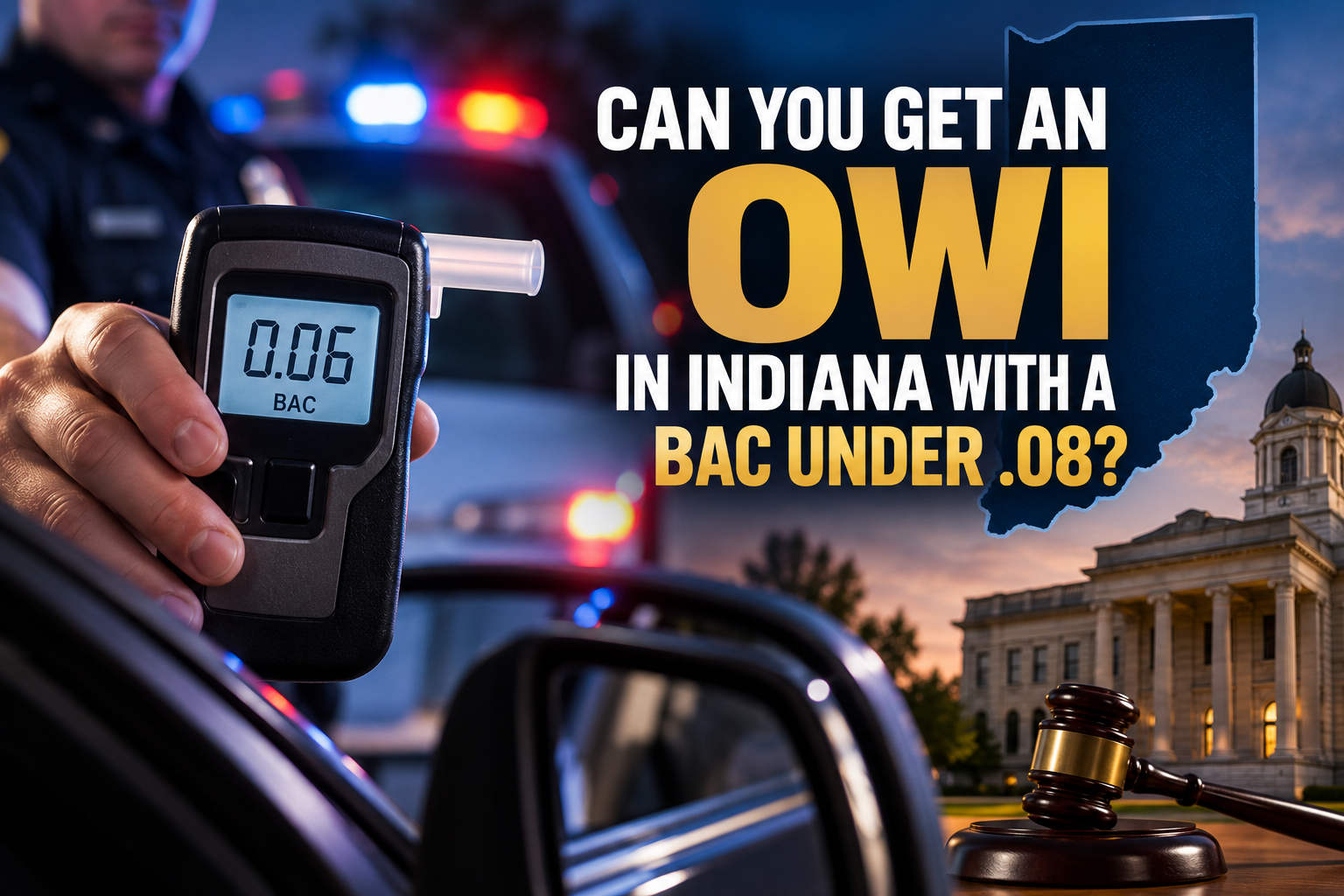
Can you get an OWI in Indiana with a BAC under .08? Learn how impairment, officer observations, video, and other evidence may still matter.
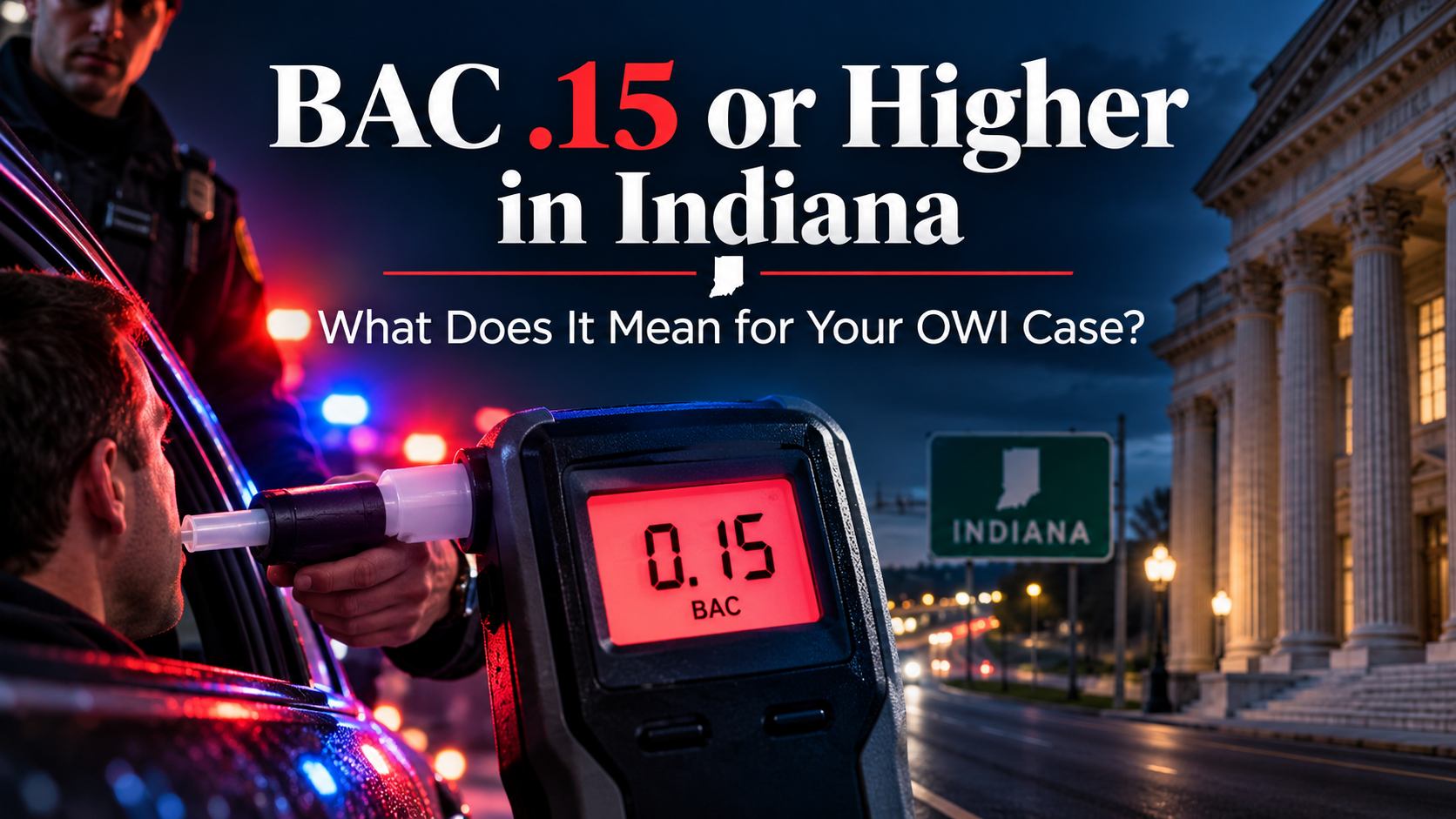
BAC .15 or higher in Indiana can lead to a more serious OWI charge. Learn what it may mean for penalties, your license, and your defense.
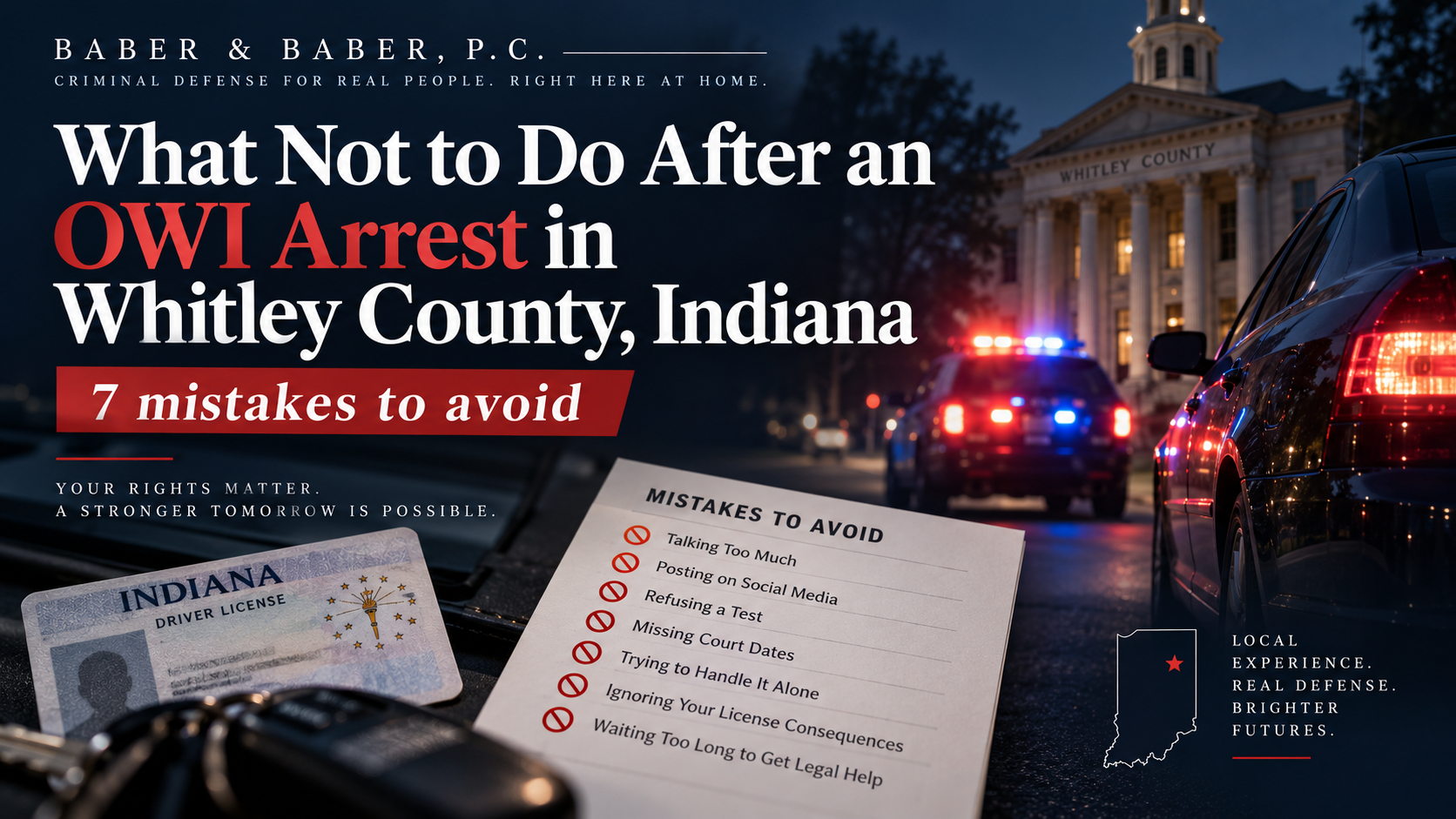
Arrested for OWI in Whitley County? Learn 7 mistakes to avoid involving driving, court, bond conditions, evidence, and social media.

Can you drive to work after an OWI arrest in Indiana? Learn how license status, specialized driving privileges, and interlock may apply.
